
Flower Painting Ideas to Inspire Your Canvas and Wall Decor
Flower painting remains one of the most rewarding and timeless subjects in art. Whether you are an artist staring down a fresh white canvas or a homeowner curating an expressive art wall, floral compositions offer infinite room for experimentation. Contemporary flower painting goes far beyond classic vases of daisies; today’s approaches explore heavy impasto palette-knife work, translucent watercolor glazes, moody chiaroscuro drama, and bold modern abstraction.
Working with floral motifs allows you to explore diverse textures, play with shifting natural light, and experiment with evocative color palettes. From thick, sculptural oil meadows that burst off the surface to airy, minimalist botanicals and vintage Dutch still lifes, these 12 creative flower painting ideas offer fresh concepts and techniques to transform your walls.
Quick Comparison Table
| Flower Painting Idea | Painting Medium & Technique | Best Interior Style | Ideal Room Placement |
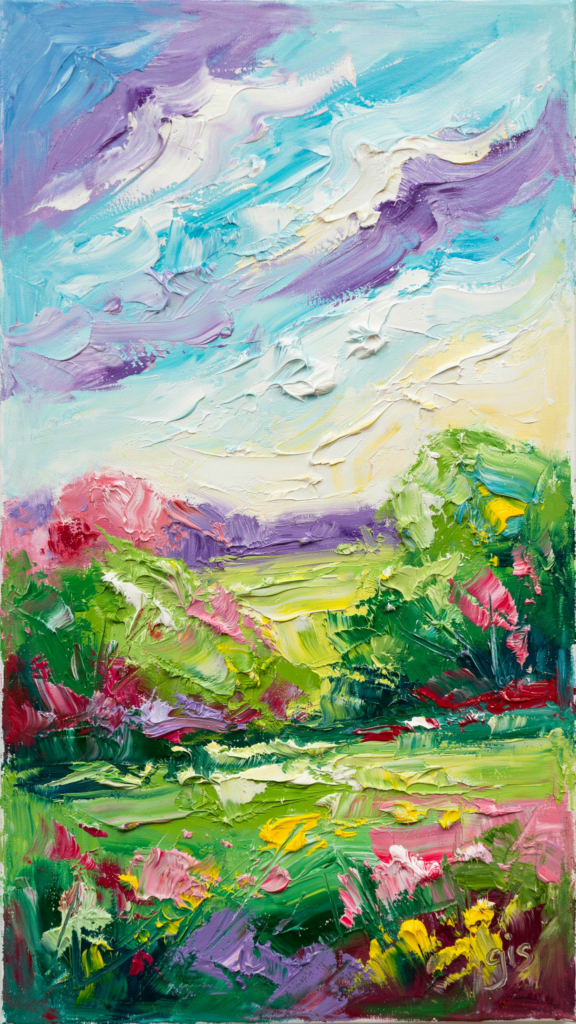
| Sun-Drenched Wildflower Meadow | Thick oil impasto, coarse palette knife | Modern Farmhouse & Rustic Boho | Living Room & Entryway |
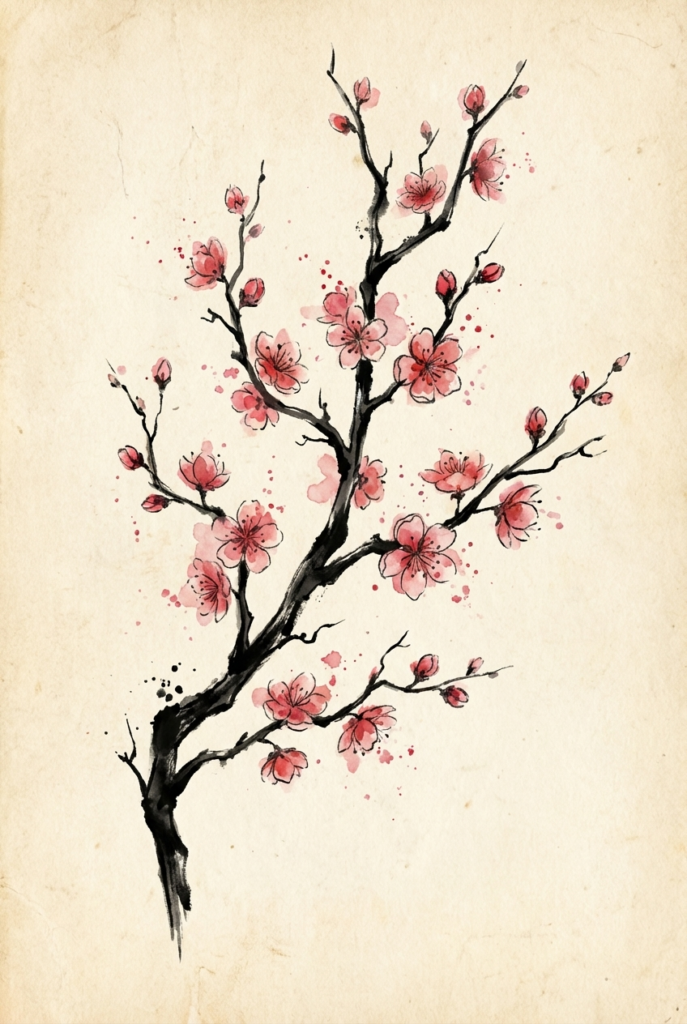
| Ethereal Watercolor Cherry Blossom | Wet-on-wet watercolor wash, fine liner | Japandi & Scandinavian | Bedroom & Meditation Corner |
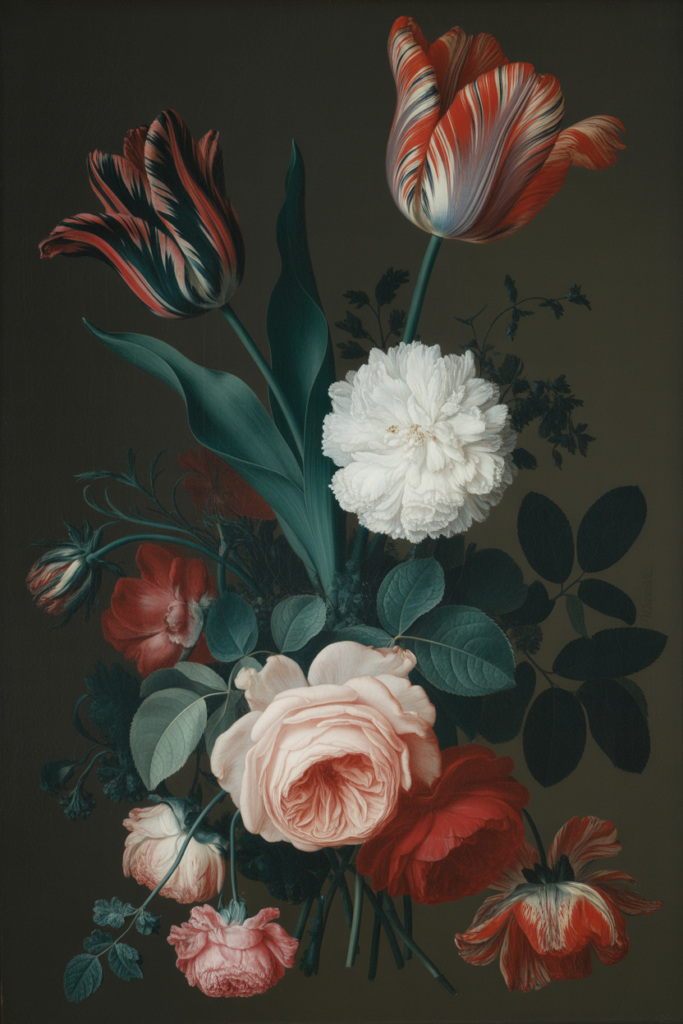
| Moody Dutch Chiaroscuro Still Life | Multi-layered oil glazes, dark chiaroscuro | Dark Academia & Traditional Luxe | Formal Dining & Library |
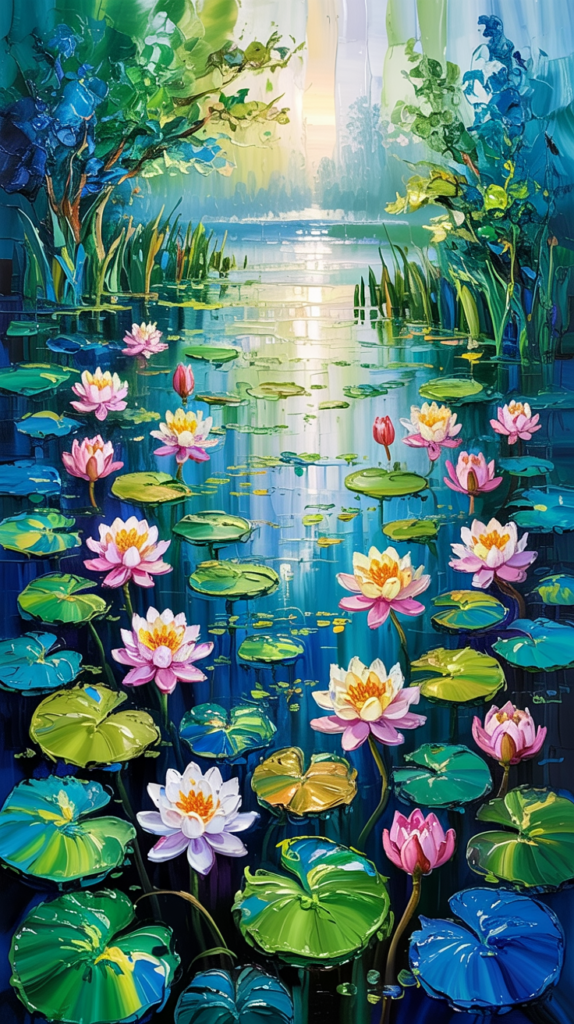
| Impressionist Water Lily Pond | Broken brushwork, wet-in-wet acrylics | French Provincial & Cottagecore | Sunroom & Living Room |
| Abstract Fluid Acrylic Sunflower | Liquid acrylic cell pour, palette drag | Eclectic Contemporary | Breakfast Nook & Studio |
| Gilded Night-Blooming Jasmine | Matte gouache & 24k gold leaf foil | Moody Glamour & Modern Chic | Master Bedroom & Dressing Area |
| Mid-Century Modern Protea Still Life | Flat gouache, graphic color blocking | Mid-Century Modern & Retro | Home Office & Hallway |
| Splatter & Drip Spring Magnolia | Expressive acrylic washes, dynamic drips | Contemporary Loft & Urban Modern | Main Feature Wall |
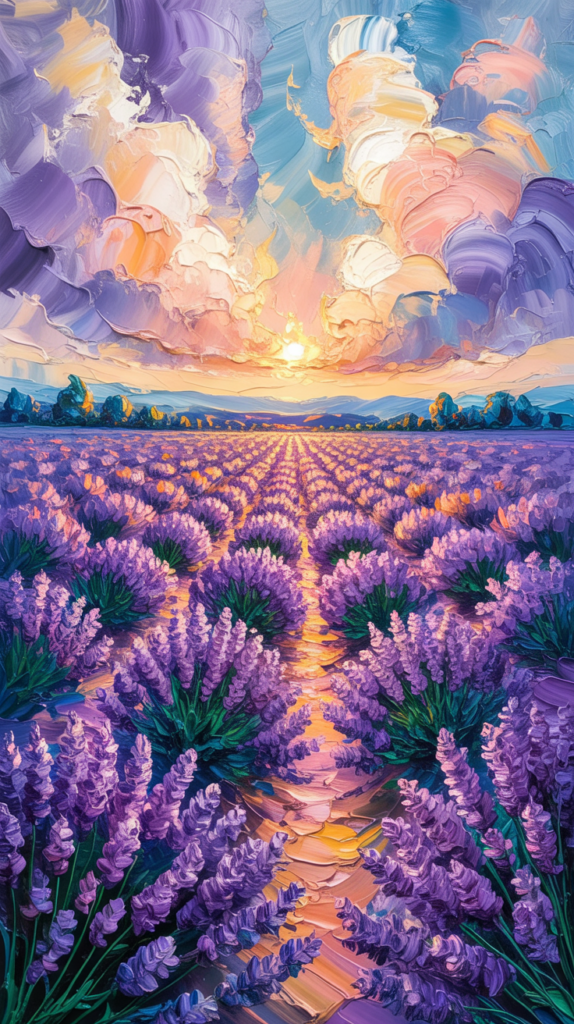
| Pointillist Lavender Sunset | Stippling, optical color mixing | Transitional & Country Chic | Bedroom & Guest Suite |
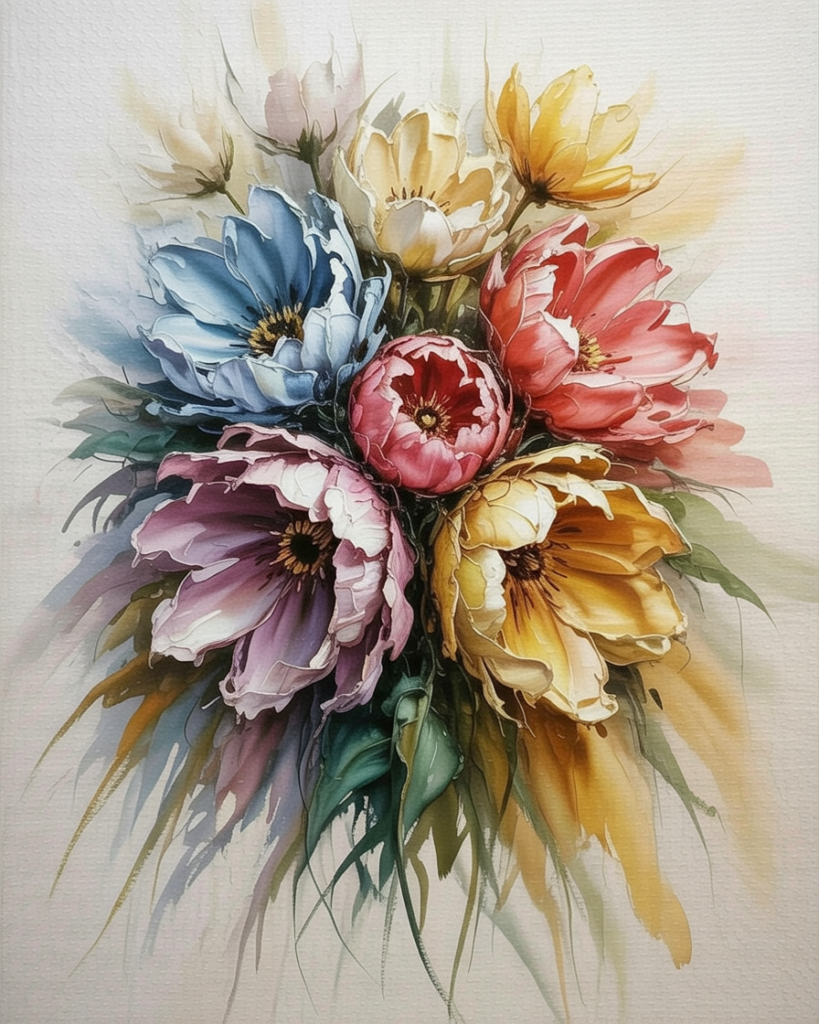
| Soft Pastel Peony Bouquet | Chalk pastel smudging, velour paper | Romantic Chic & Feminine Luxe | Vanity Alcove & Powder Room |
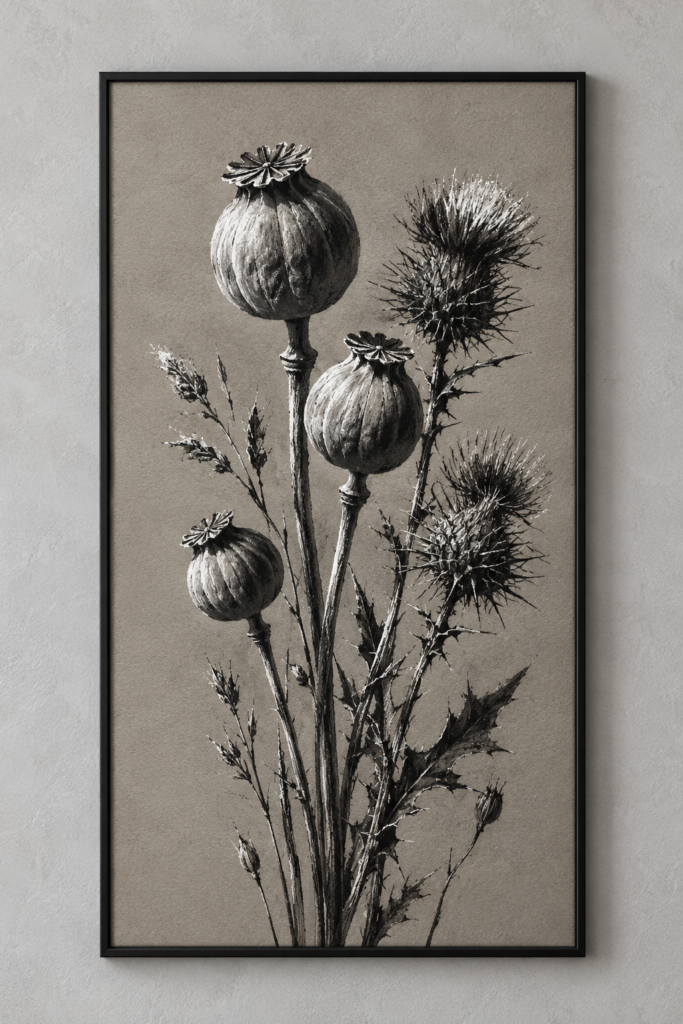
| Monochrome Charcoal & Gesso Botanical | Compressed charcoal, dry brush gesso | Minimalist & Wabi-Sabi | Living Room & Study |
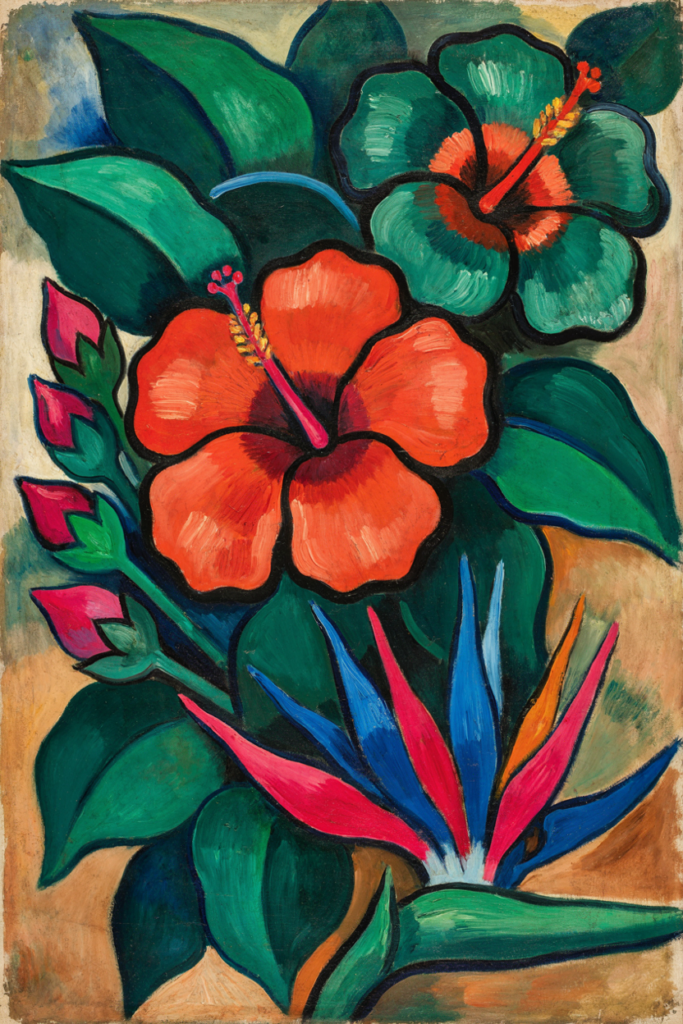
| Fauvist Tropical Hibiscus Burst | Saturated acrylics, bold expressive outlines | Maximalist & Bohemian Modern | Dining Area & Creative Space |
12 Creative Flower Painting Ideas
1. Sun-Drenched Wildflower Meadow
Rather than painting individual stems in isolation, this style captures the wild, untamed energy of an open alpine field. Using a stiff palette knife and heavy-body oil or acrylic paints, load the blade with mixed pigments—buttercup yellow, poppy red, cornflower blue, and olive green—and sweep directly onto the canvas. The thick, sculpted ridges catch physical shadows, creating an energetic textural foreground that softly blurs toward a hazy summer horizon.
2. Ethereal Watercolor Cherry Blossom
Embracing the fluid spontaneity of traditional East Asian brush painting, this concept focuses on wet-on-wet watercolor blooms on textured cold-press paper. Pale blush and carmine pigments bleed naturally into damp paper fibers to create soft petal edges, contrasted by sharp, calligraphic dark sepia branches painted with a fine rigger brush. Generous negative space gives the piece an airy, tranquil mood perfect for bedrooms.
3. Moody Dutch Chiaroscuro Still Life
Channeling the dramatic lighting of 17th-century Dutch masters like Rachel Ruysch and Jan van Huysum, this composition features an overflowing arrangement of heirloom roses, ruffled parrot tulips, and cascading hydrangeas emerging from an obsidian shadow. Layered oil glazes build luminosity on velvet petals, while deep umber and charcoal backgrounds create intense theatrical contrast over dining consoles.
4. Impressionist Water Lily Pond
Inspired by Claude Monet’s gardens at Giverny, this technique builds surface harmony through quick, directional brushstrokes and broken color. Shimmering reflections of sky, weeping willows, and floating water lily blossoms blend into the water’s surface in rich teals, lavenders, and rose-tinted whites. Viewing the painting from a few steps back lets the eye optically merge the strokes into tranquil, shimmering water.
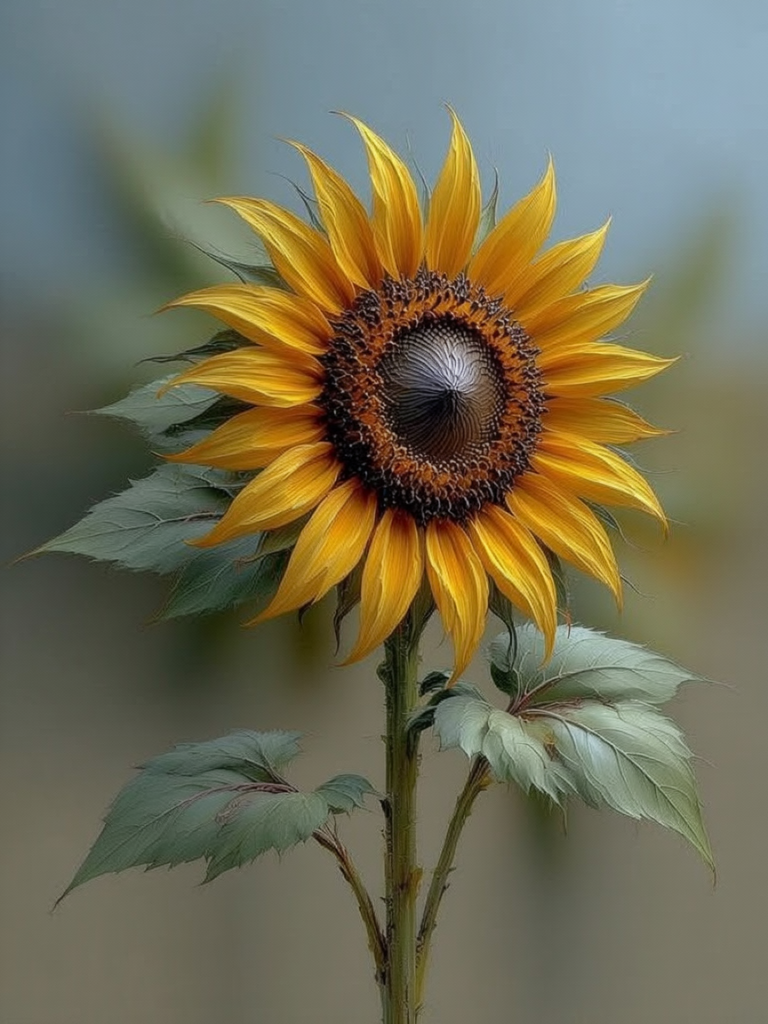
5. Abstract Fluid Acrylic Sunflower
A contemporary twist on Vincent van Gogh’s signature motif, this idea combines controlled acrylic pours with expressive palette-knife dragging. Swirls of warm ochre, cadmium yellow, and burnt orange are poured to mimic radiant sunflower petals spinning around a deep raw-umber seed core. Metallic bronze and gold mica veins woven into the fluid paint add modern reflective shimmer.
6. Gilded Night-Blooming Jasmine
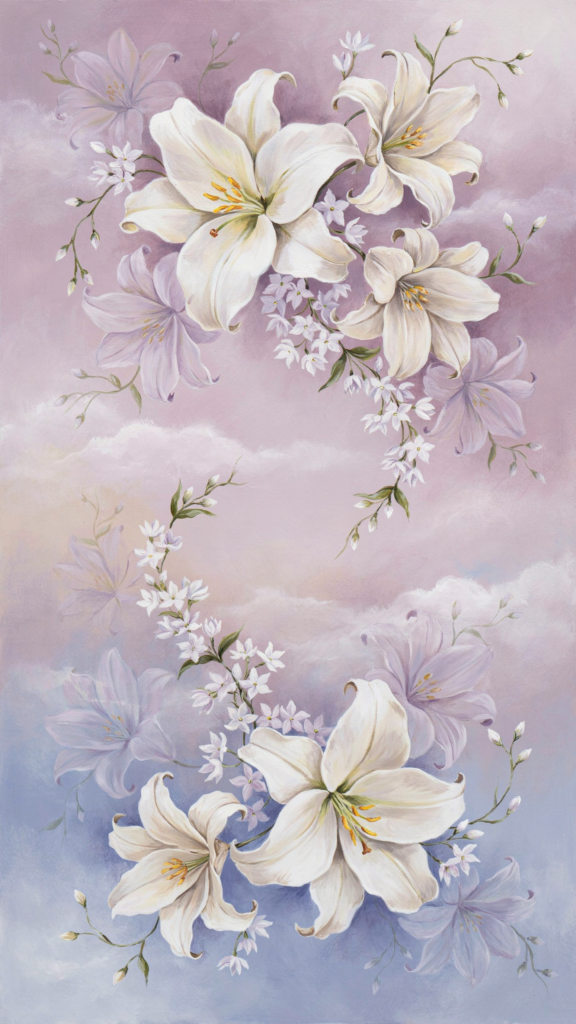
This composition pairs velvety matte opaque gouache with shimmering 24k gold leaf. Slender star-shaped jasmine flowers and climbing leafy tendrils are painted in chalky whites and muted sage greens against a deep midnight-indigo or pitch-black ground. Applying genuine gold leaf or liquid gold gilding along the stamen lines and petal margins introduces refined, jewelry-like elegance to vanity spaces.
7. Mid-Century Modern Protea Still Life
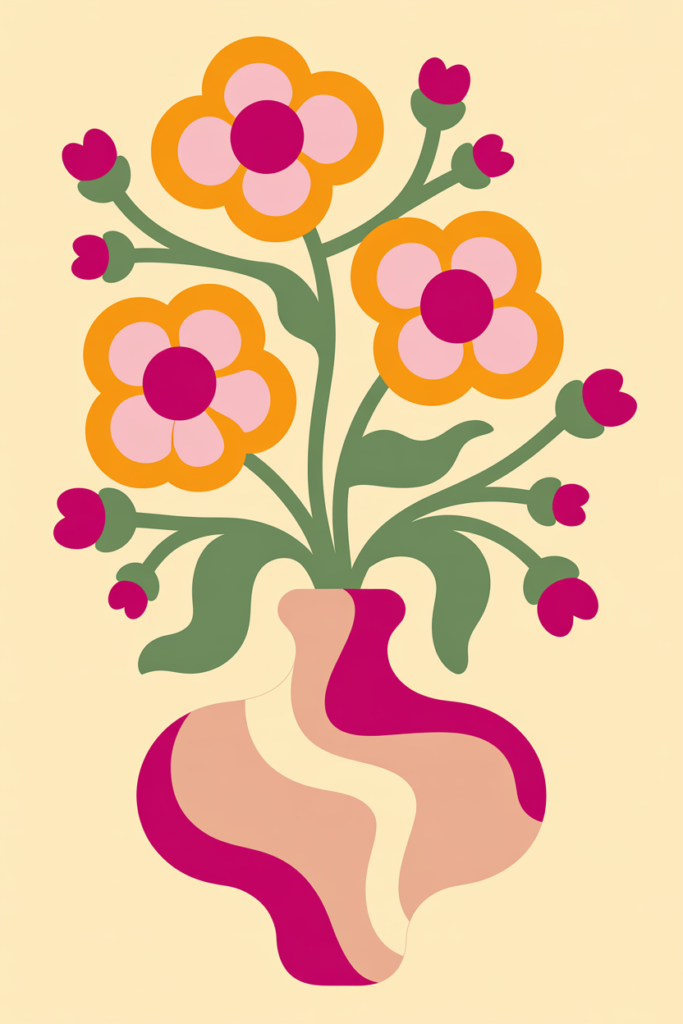
For spaces characterized by clean lines and warm timber, this graphic still life strips away realistic modeling in favor of flat color planes and bold shapes. Featuring a sculptural King Protea bloom and silvery eucalyptus leaves arranged in an earthy ceramic jug, the composition relies on dusty terracotta, avocado green, mustard ochre, and warm biscuit tones to deliver retro charm.
8. Splatter & Drip Spring Magnolia
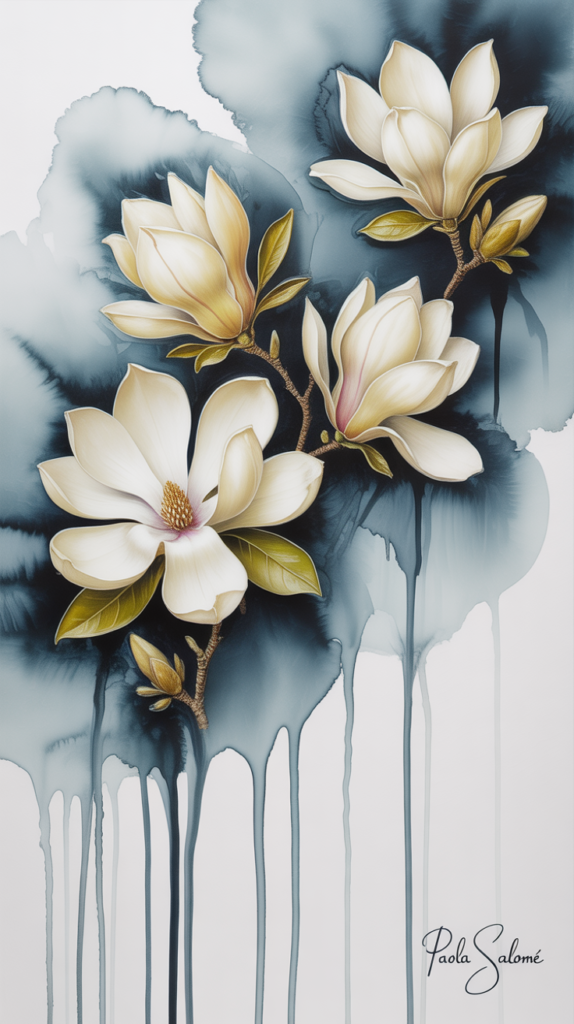
Combining delicate subject matter with modern abstract expressionism, this painting features oversized white and blush saucer magnolia blossoms painted in loose acrylic washes. Dynamic paint drips, intentional watery runs, and energetic splatters in charcoal and burnt coral streak across the lower half of the canvas, capturing the fleeting, fragile beauty of early spring blossoms.
9. Pointillist Lavender Field at Sunset
Building a composition entirely through tiny dots and stippled marks creates visual vibration and atmospheric haze. Tiny flecks of cobalt blue, violet, magenta, and pale peach sit side-by-side across sweeping diagonal rows of lavender, illuminated by a warm amber sunset sky. The technique rewards close inspection while delivering a warm, glowing landscape from across the room.
10. Soft Pastel Peony Bouquet
Soft chalk pastels on tinted sanded paper produce unmatched velvety softness for petal-heavy blooms like peonies and garden roses. Blending powdery pigment with blending stumps allows dusty pink and creamy white petals to transition smoothly, while sharp pastel edges define delicate petal rims and lush foliage.
11. Monochrome Charcoal & Gesso Botanical
Restricting your palette to black and white forces you to focus entirely on light, shadow, and silhouette. Using raw compressed charcoal on toned heavyweight paper, sketch oversized poppy pods and delicate wild grasses, then highlight petal rims and light reflections using thick, dry-brushed white gesso. The stark, architectural simplicity complements Japandi and minimalist interiors.
12. Fauvist Tropical Hibiscus Burst
Inspired by the bold, emotive color theory of Henri Matisse and the Fauves, this vibrant painting disregards realistic botanical color in favor of emotional impact. Blooming hibiscus and bird-of-paradise petals are laid down in saturated cobalt blues, fiery vermilion, electric pink, and emerald green, bounded by dark, expressive contour lines that bring joyful warmth to creative spaces.
Tips for Framing & Hanging Flower Paintings
- Select Frames that Complement the Painting’s Texture: Heavy impasto and palette-knife paintings look best in minimalist floating wood frames (natural oak or walnut) that leave the canvas edges uncovered. Watercolor and pastel botanicals require archival mat boards and UV-protective glass to shield delicate pigments.
- Hang at Proper Sightline: The horizontal centerline of your floral painting should sit between 57 and 60 inches from the floor, placing the visual focal point directly at natural eye level.
- Match Palette Temperature to Room Light: Warm-toned flower paintings (terracotta, amber, cadmium yellow) help warm up cool, north-facing rooms, while soft pastels and cool lavender-blue botanicals thrive under bright, south-facing daylight.
Benefits of Flower Paintings in Home Decor
- Natural Biophilic Connection: Floral artwork brings organic shapes and botanical vitality indoors, counteracting the hard geometric lines of modern electronics and drywall.
- Flexible Color Anchor: A multi-tonal floral painting can serve as the primary color palette for a room, allowing you to pull accent hues for throw pillows, rugs, and drapery.
- Enduring Seasonal Warmth: High-quality floral art preserves the vibrant energy of spring and summer blooms year-round, keeping rooms inviting during cold winter months.
Best Interior Styles for Flower Paintings
- Scandinavian & Japandi
- Modern Farmhouse & Rustic Contemporary
- French Provincial & Cottagecore
- Mid-Century Modern & Retro Eclectic
- Dark Academia & Moody Traditional
- Transitional & Contemporary Luxury
Frequently Asked Questions (FAQs)
What paint medium is best for beginners trying flower painting?
Heavy-body acrylics are the most forgiving medium for beginners. They dry quickly, allow easy layering to correct mistakes, and can be applied thinly like watercolors or thickly with a palette knife to create textured impasto effects.
How do you protect a textured flower oil painting from dust?
Once the oil paint is fully cured (typically 6 to 12 months after completion), apply a high-quality artist varnish (such as satin or gloss dammar or mineral-spirit based acrylic varnish). This forms a protective shield against dust, UV rays, and environmental yellowing.
Can dark, moody flower paintings work in smaller rooms?
Yes. When paired with directional picture lighting, a dark floral still life adds depth and creates an intimate, boutique-hotel ambiance in compact spaces like powder rooms, foyers, and reading nooks.
Conclusion: Bringing Artful Botanicals to Life
Flower painting offers an endless playground of texture, color, and emotional expression. By stepping away from predictable floral depictions toward heavy palette-knife fields, atmospheric chiaroscuro still lifes, fluid acrylic pours, and delicate watercolor bleeds, botanical art becomes a powerful centerpiece for personal expression.
Whether you paint your own canvas using loose, expressive strokes or curate a statement print for your home, these diverse floral styles prove that botanical art will always hold a vital, timeless place in contemporary interior design.